THE LIVES OF STARS · 2 MIN READ

Why do stars shine?

Behind a star's steady glow lies a balance between gravity and pressure in hot matter.
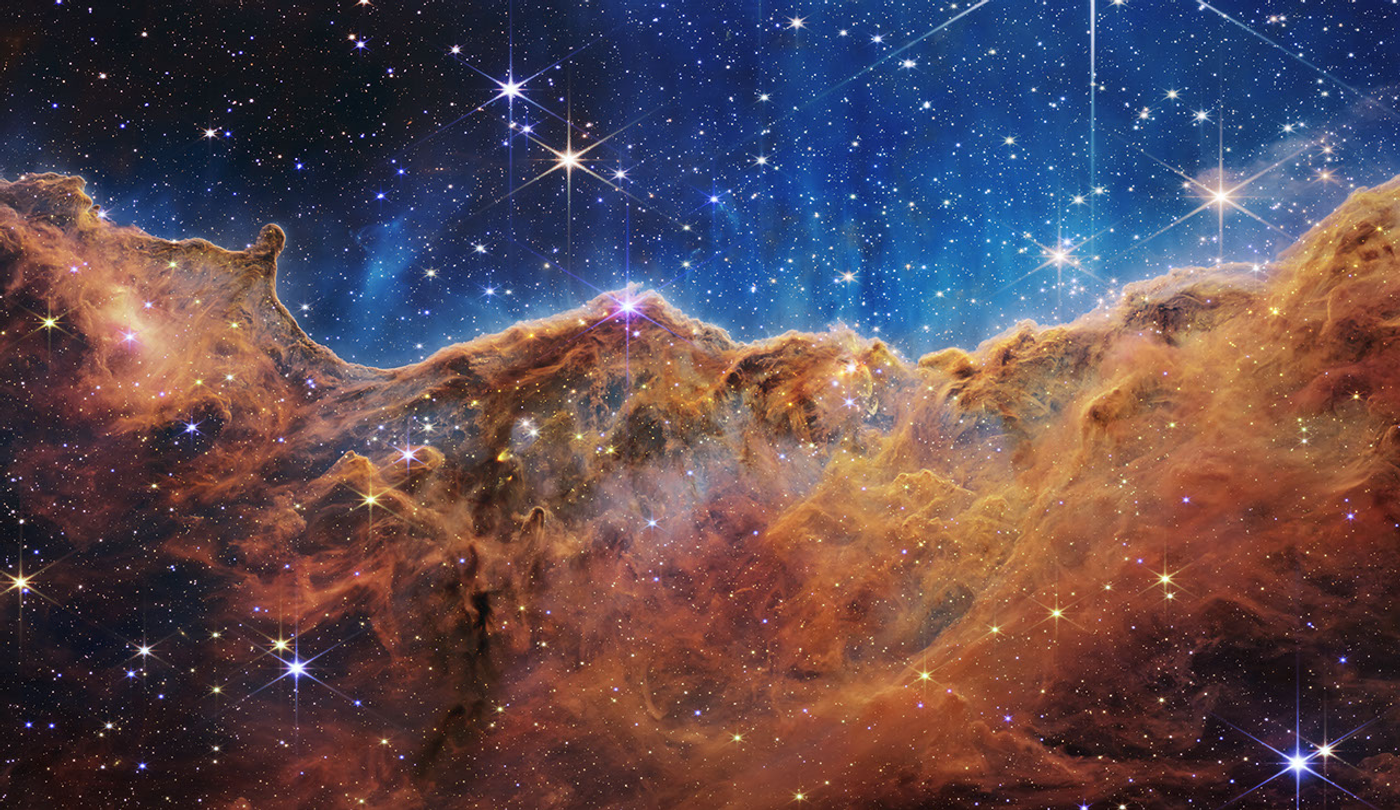
The Cosmic Cliffs in the Carina star-forming region. A Webb infrared composite with colours assigned to filters.
The Cosmic Cliffs in the Carina star-forming region. A Webb infrared composite with colours assigned to filters. NASA / ESA / CSA / STScI

Born in a cloud

Stars form in large clouds of gas and dust. As gravity draws part of a cloud together, the material heats up, producing a protostar: the precursor of an ordinary star.

Energy from the core

At sufficiently high temperatures and pressures, nuclear fusion begins. Hydrogen nuclei combine to form helium, releasing energy. That energy heats the star and eventually escapes as radiation.

A lasting balance

Gravity pulls the star inwards, while pressure resists compression. Steady hydrogen fusion defines the main sequence, the longest stage of a star's life. The Sun is a main-sequence star.

Different endings

Mass strongly influences a star's lifetime. Massive stars use their fuel faster. As core conditions change, further stages follow. A Sun-like star ultimately leaves a white dwarf; more massive stars can meet different ends.

✦

Main-sequence stars draw their energy from nuclear fusion in their cores.
Continue with the original source

NASA: explore this topic
← Back to the journal

ONE MORE QUESTION

There is always more to discover.

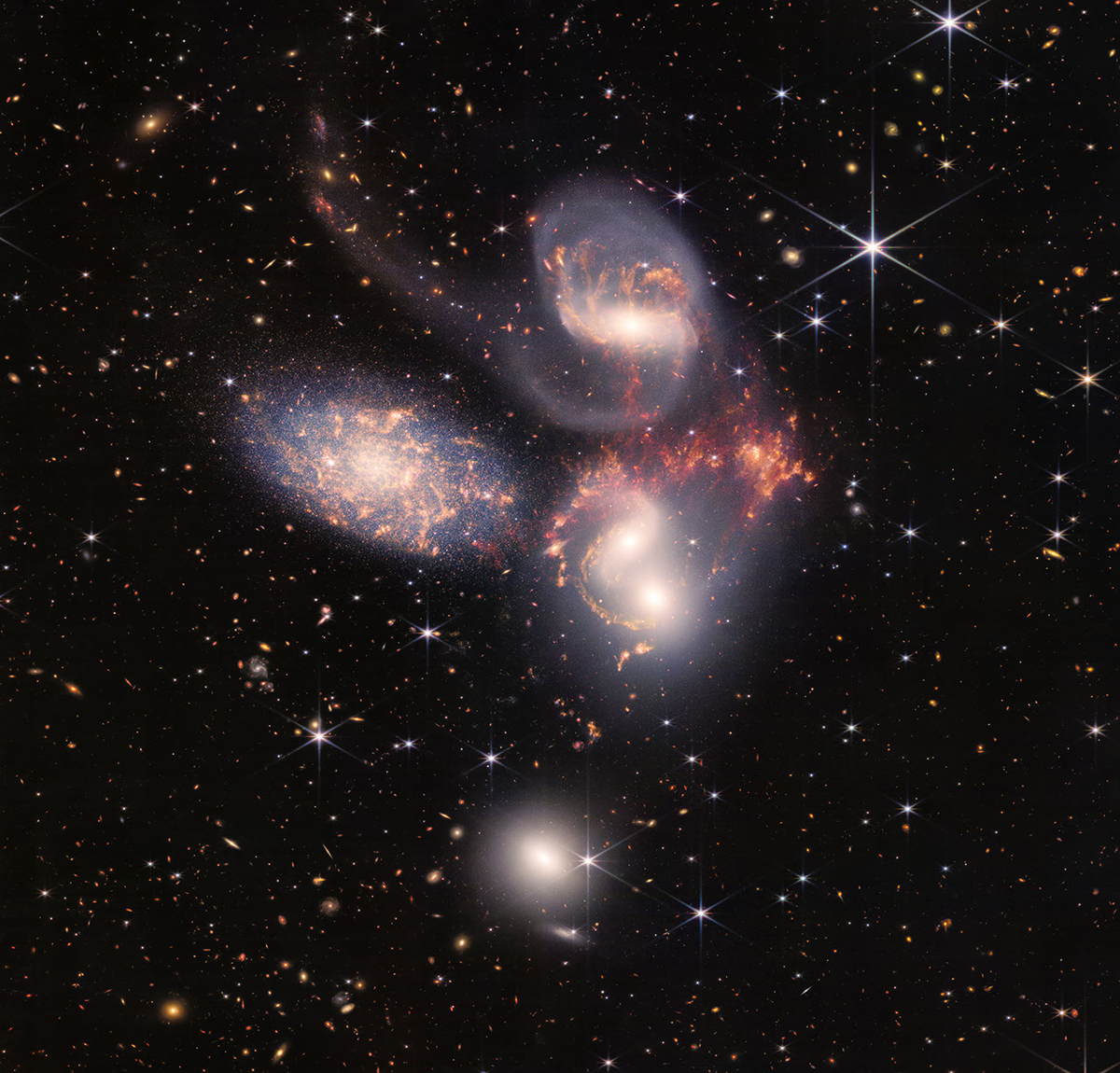
Stephan’s Quintet, an apparent group of galaxies. One of the five is closer than the others. A NIRCam and MIRI infrared composite.The scale of the universe

Why is a light-year a distance?

When kilometres become unwieldy, the journey of light gives us a more useful measure.

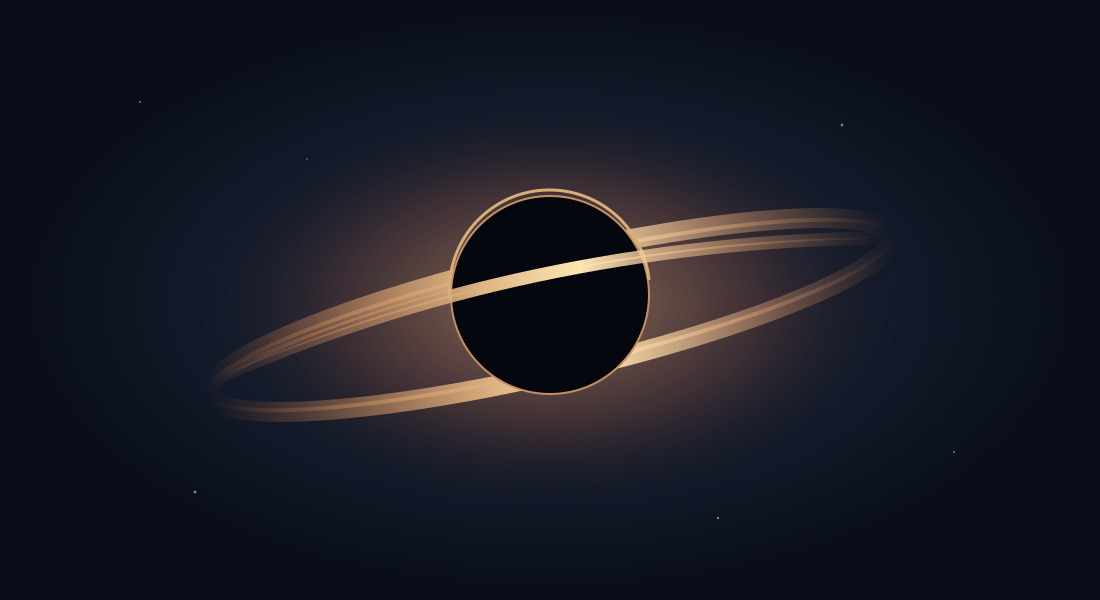
Schematic illustration: black hole and accretion discAstrophysics

What lies beyond the event horizon?

A black hole has a boundary beyond which even light cannot return to the outside universe.

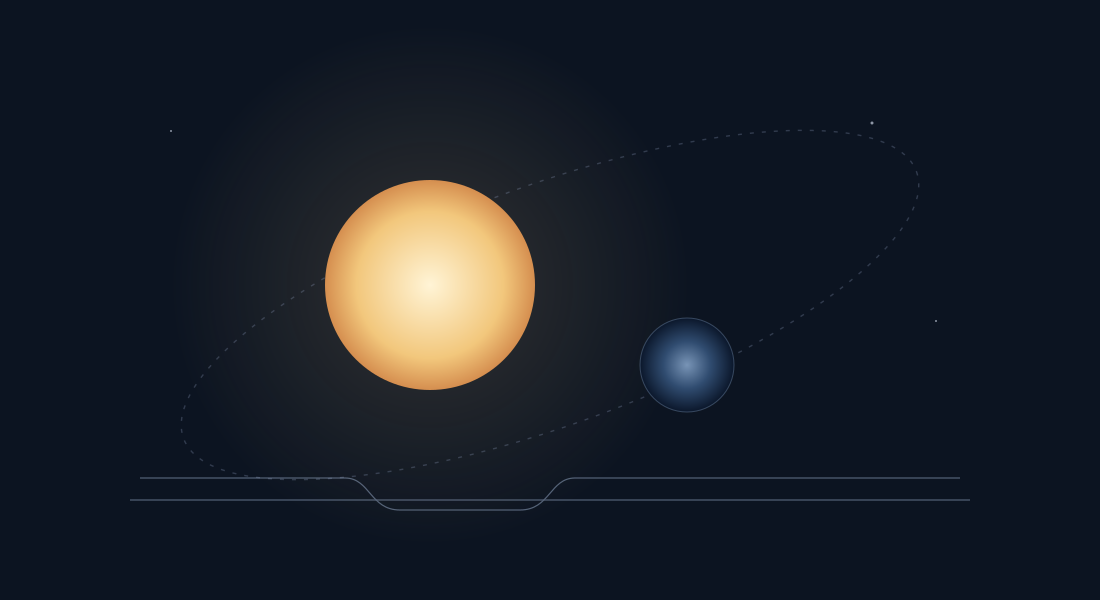
Schematic illustration: a planet passing in front of a starDistant worlds

How do we find planets around other stars?

A tiny change in a star's light can reveal the presence of a planet.

Find your question

Popular in the atlas

Close with Esc

A little discovery

Did you know?

Explore the planet