FORCES IN SPACE · 2 MIN READ

Why do planets keep orbiting?

An orbit combines forward motion with a gravitational pull that continually changes its direction.
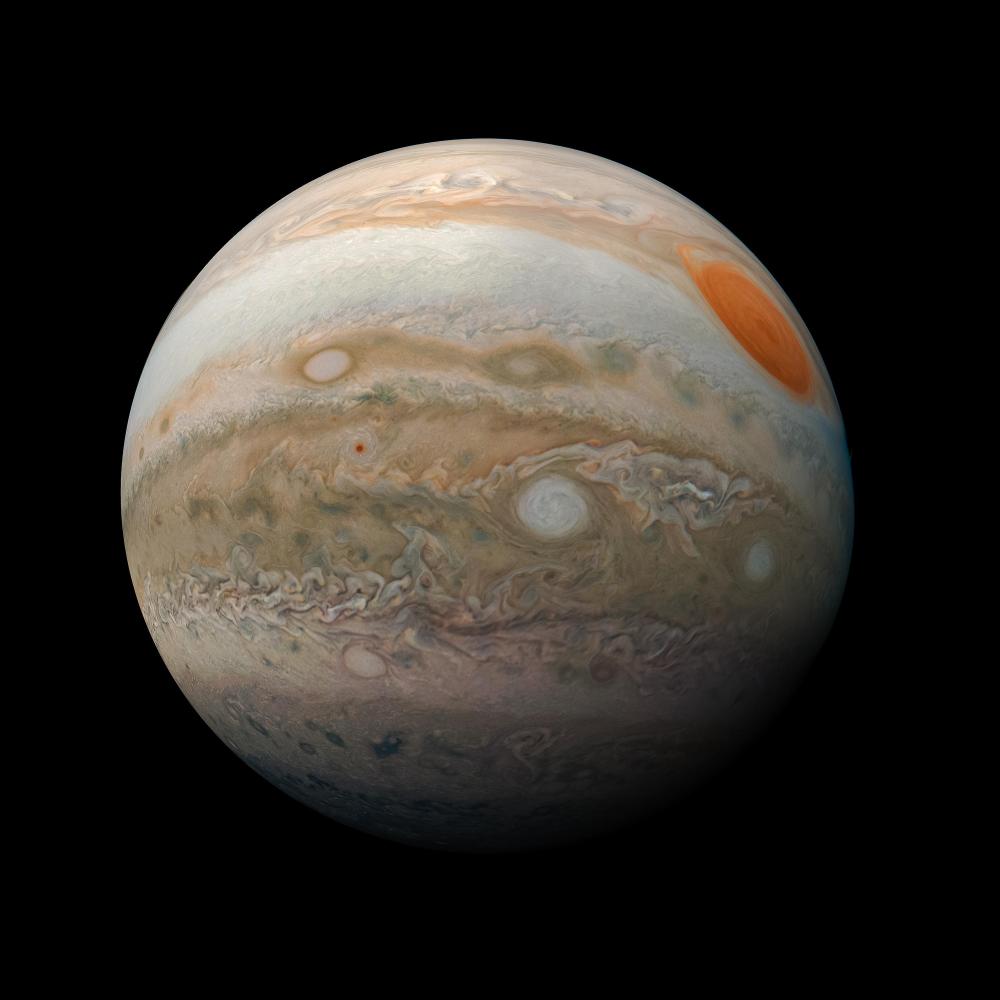
Clouds on Jupiter in a processed Juno image.
Clouds on Jupiter in a processed Juno image. NASA / JPL-Caltech / SwRI / MSSS; processing by Kevin M. Gill

A curved journey

Without a force, a moving object continues along a straight line. Gravity bends its path. With suitable speed and direction, an object keeps falling around its companion rather than colliding with it.

Both bodies move

A planet and star attract each other and orbit their common centre of mass, called the barycentre. This point lies closer to the more massive object; the star also moves.

A useful prediction

Isaac Newton connected planetary motion with the same gravity that makes objects fall on Earth. His laws remain useful for planning spacecraft journeys, while Einstein’s relativity provides a deeper description.

TRY THE IDEA

Find the balance

Imagine two equal-mass objects 1,000 km apart. Where is their barycentre?

Explore the answer +

Halfway between them: 500 km from each. Both objects move around that shared point.

✦

Orbiting bodies share a centre of mass, and gravity continually bends their motion.
Continue with the original source

NASA: explore this topic
← Back to the journal

ONE MORE QUESTION

There is always more to discover.

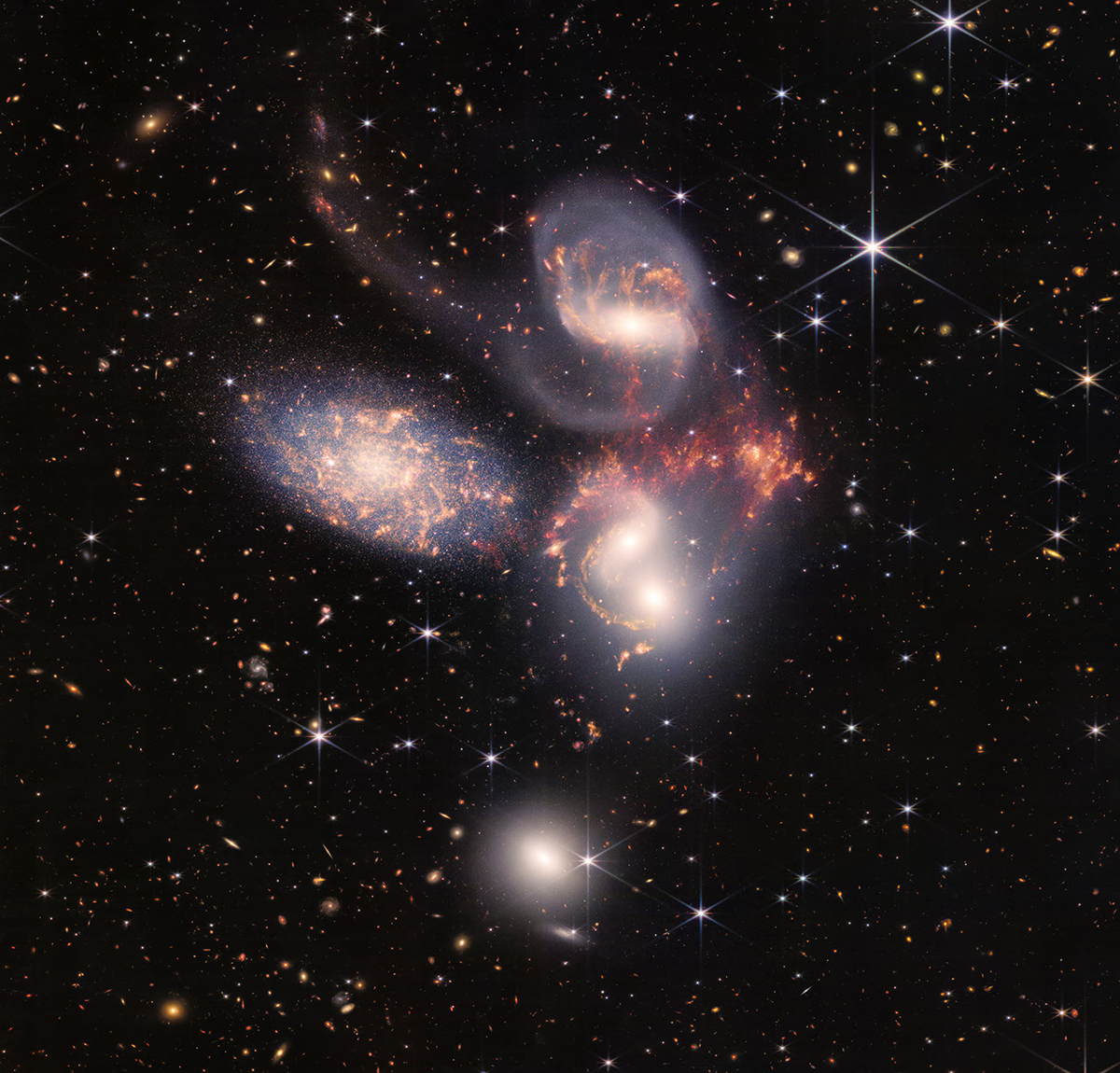
Stephan’s Quintet, an apparent group of galaxies. One of the five is closer than the others. A NIRCam and MIRI infrared composite.The scale of the universe

Why is a light-year a distance?

When kilometres become unwieldy, the journey of light gives us a more useful measure.

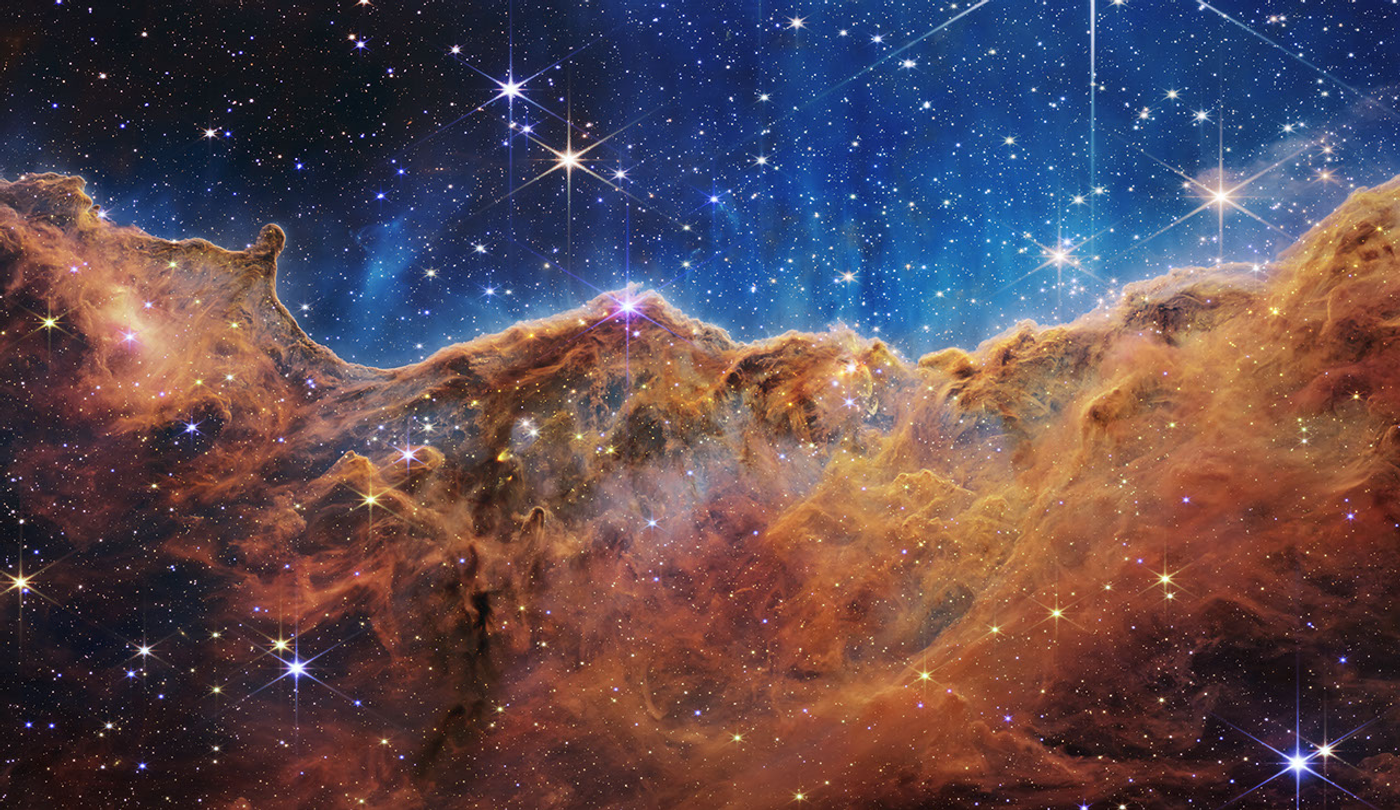
The Cosmic Cliffs in the Carina star-forming region. A Webb infrared composite with colours assigned to filters.The lives of stars

Why do stars shine?

Behind a star's steady glow lies a balance between gravity and pressure in hot matter.

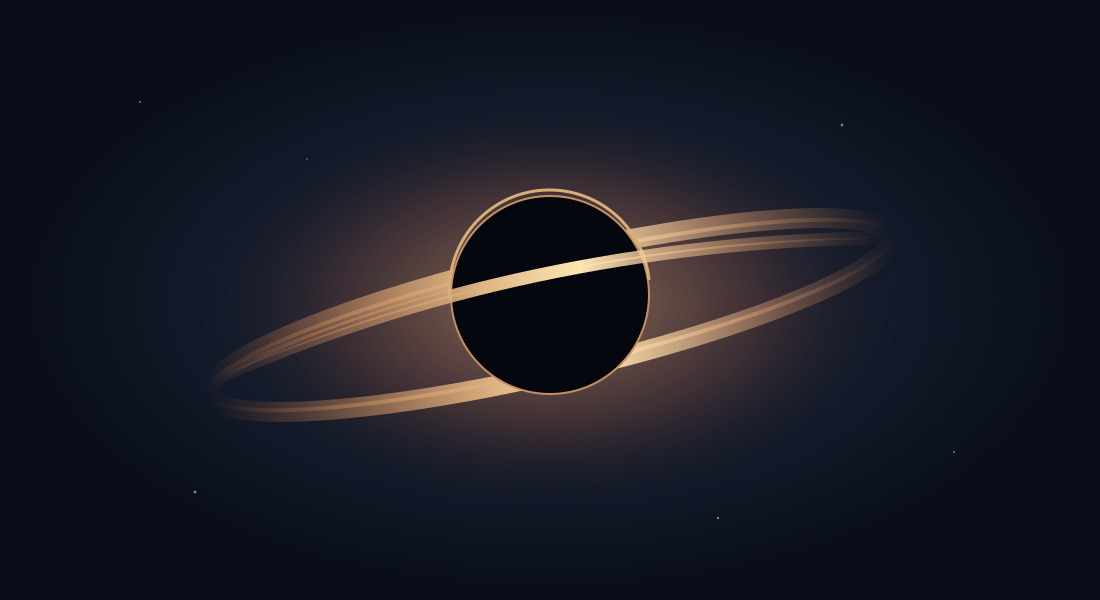
Schematic illustration: black hole and accretion discAstrophysics

What lies beyond the event horizon?

A black hole has a boundary beyond which even light cannot return to the outside universe.

Find your question

Popular in the atlas

Close with Esc

A little discovery

Did you know?

Explore the planet