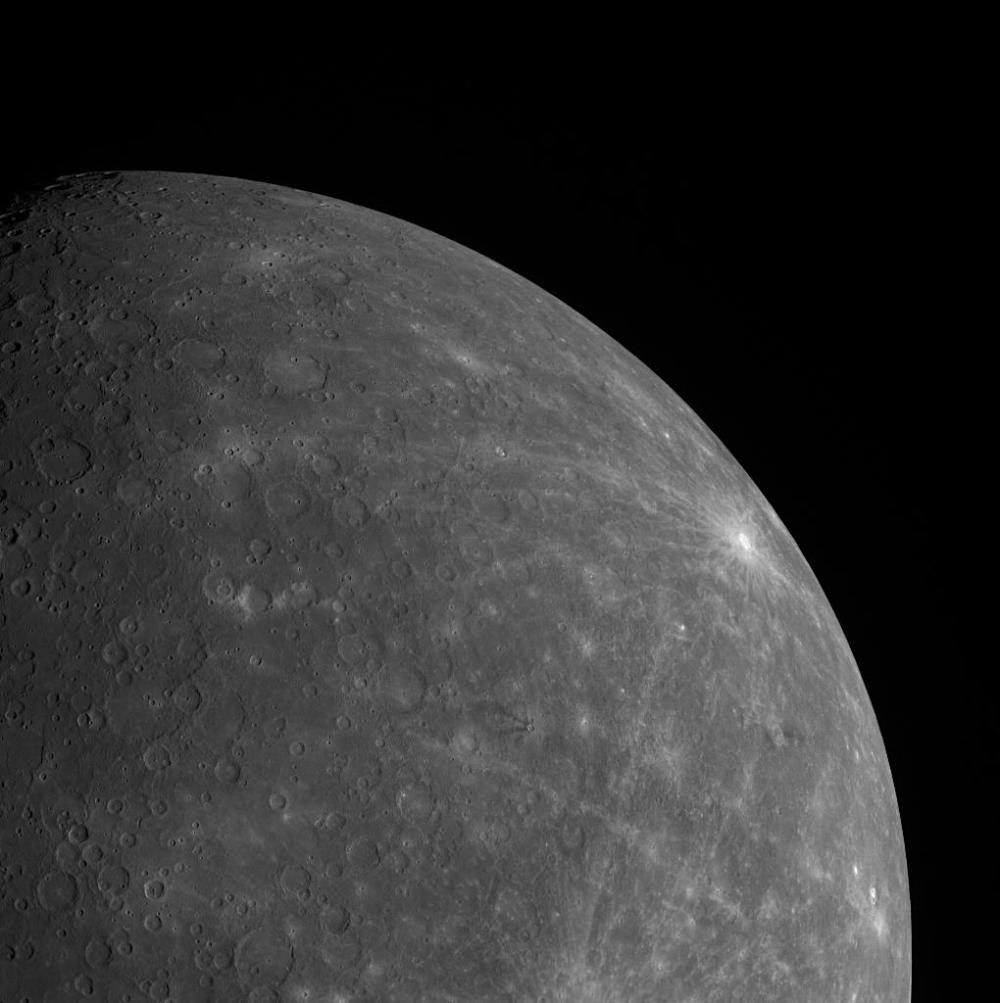
INSIDE THIS WORLD
More than a point in the sky.
Mercury has almost no atmosphere to redistribute heat, so conditions differ dramatically between its sunlit and night sides. Being closest to the Sun does not make it the hottest planet: that distinction belongs to Venus.
Mercury rotates three times for every two orbits around the Sun. This relationship means that one solar day, from one noon to the next, lasts about 176 Earth days.
How we explore it
Mariner 10 and MESSENGER revealed the landscape, composition and magnetic field of this small world.
Sources & measurements
NASA: planet facts NASA/JPL: physical parameters NASA/JPL: orbitsDiameter is the mean volumetric diameter, rounded to the nearest kilometre. Periods use Earth days or years. AU values are rounded orbital semi-major axes; instantaneous distances differ.