INSIDE THIS WORLD
More than a point in the sky.
Uranus has an axial tilt of about 98°, making it appear to roll around its orbit on its side. Its long year means that each season lasts many Earth years.
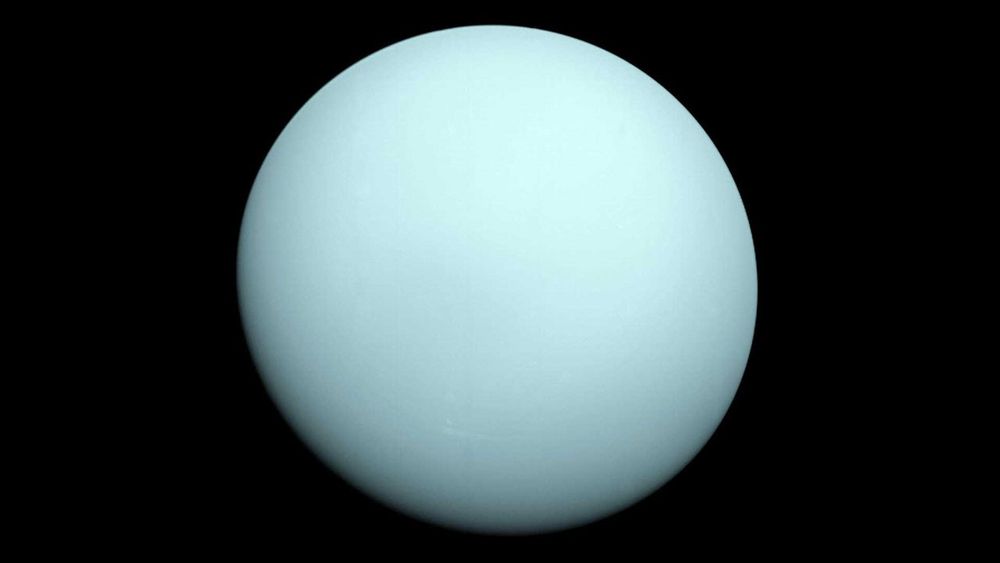
Uranus is an ice giant. Here, “ice” refers to the composition and formation history of its materials, rather than a simple frozen surface. Methane in the upper atmosphere absorbs some red light, contributing to the planet's bluish colour.
How we explore it
Voyager 2 flew past Uranus in 1986. Ground-based telescopes and space observatories also study the planet.
Sources & measurements
NASA: planet facts NASA/JPL: physical parameters NASA/JPL: orbitsDiameter is the mean volumetric diameter, rounded to the nearest kilometre. Periods use Earth days or years. AU values are rounded orbital semi-major axes; instantaneous distances differ.